
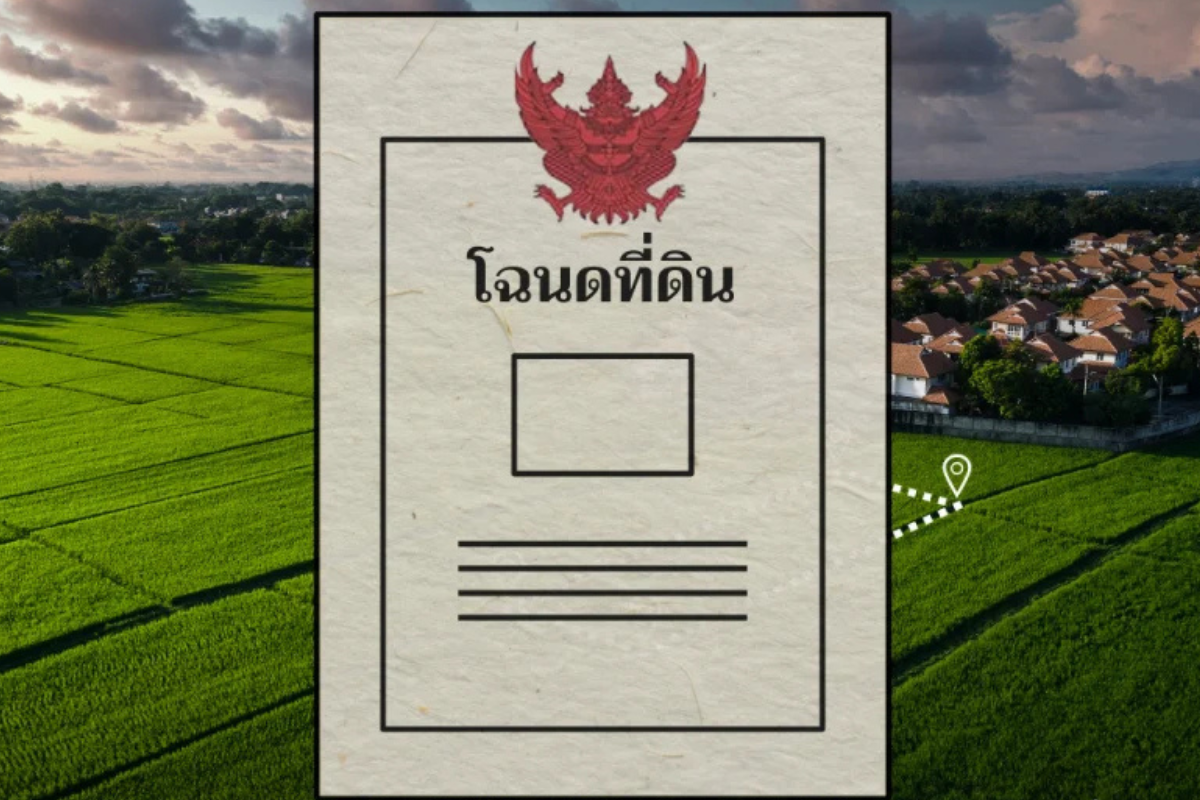
"How many types of land title deeds are there, and what are the differences between the various colors of the Garuda emblem?"
Real estate transactions, particularly the purchase and sale of houses and land, are among the most significant investments a person can make in their lifetime. Therefore, understanding land title documents is essential to avoiding costly mistakes and ensuring confidence in property ownership.In this article, Land & Houses will guide you through everything you need to know about land title deeds in Thailand, including the different types available and the meaning behind the various colors of the Garuda emblem displayed on these documents. By gaining a clear understanding of these important details, you can make informed decisions and ensure that your property investment is both secure and successful.
"Understanding Land Title Deeds: The Essential Legal Documents Certifying Land Ownership Rights"
A land title deed is an official legal document issued by the Land Department that certifies ownership of a parcel of land. It is considered the highest form of legal evidence of land ownership, confirming that the individual named on the title deed is the lawful owner of the property.The holder of a land title deed has the legal right to use, sell, transfer, or mortgage the land in accordance with the law. Therefore, having a clear understanding of land title deeds is fundamental for all property owners and real estate investors, as it helps ensure secure ownership and informed investment decisions.
"Key Rights and Benefits of Land Title DeedOwnership"
Holding ownership rights under a Nor Sor 4 Jor (Chanote) Land Title Deed, identified by the Red Garuda emblem and recognized as the highest form of land ownership documentation in Thailand, grants the owner full legal rights and benefits as follows:Full Ownership Rights
The title holder is the lawful owner of the land with complete ownership rights. This includes the right to occupy, use, and benefit from the property for residential, agricultural, commercial, or other lawful purposes. The owner also has the legal authority to prevent unauthorized individuals from entering or using the land.Ability to Conduct All Types of Legal Transactions
A Chanote land title deed may be used in various legal transactions, including the sale and transfer of ownership, inheritance transfers, registration of easements, lease agreements, and as collateral for mortgage registration with financial institutions.A Valuable and Highly Credible Asset
Land title deeds, particularly those bearing the Red Garuda emblem, are widely recognized and accepted by financial institutions and the real estate market. As a result, they generally command higher market value, facilitate property transactions, and provide greater access to financing compared to other forms of land documentation.Protection Against Encroachment and Adverse Possession
A properly registered land title deed provides stronger legal protection against land encroachment and ownership disputes. However, property owners should continue to monitor and protect their rights, as under certain legal circumstances, prolonged, open, and uninterrupted possession by another party may give rise to claims of adverse possession. Maintaining active control and oversight of the property is therefore essential to safeguarding ownership rights.
"How Many Types of Land Title Documents Are There, and What Are the Differences Between Them?"
When discussing land ownership documents, many people assume that there is only one type of land title deed. In reality, however, there are several categories of land documents, each representing different levels of ownership rights and legal authority.One of the easiest ways to distinguish between these documents is by the color of the Garuda emblem displayed at the top of the document. Each color signifies a different legal status, ownership right, and scope of permissible transactions. Understanding these distinctions is essential for anyone involved in buying, selling, or investing in land, as the type of land document can significantly affect ownership security, transferability, and overall property value.
"What Is a Red Garuda Land Title Deed (Nor Sor 4 Jor)?"
A Red Garuda Land Title Deed, officially classified as Nor Sor 4 Jor (Chanote), is the highest category of land ownership document recognized under Thai law. It grants the holder full ownership rights over the land and provides the highest level of legal protection.The owner is entitled to make full use of the property and may freely conduct legal transactions such as buying, selling, transferring ownership, exchanging, or mortgaging the land with financial institutions in accordance with the law. Due to its strong legal status, a Red Garuda title deed is considered the most reliable and valuable form of land ownership document in the real estate market.As a result, residential properties developed by reputable housing projects are typically accompanied by this type of land title deed, providing buyers with greater confidence in the security and legitimacy of their investment.
"What Is a Green Garuda Land Document? (Nor Sor 3 Gor)"
A Green Garuda land document, officially known as Nor Sor 3 Gor (N.S.3 Gor), is a Certificate of Utilization issued for land that has already been mapped using aerial photography. As a result, the location and boundaries of the land are relatively clear and can be identified with reasonable accuracy.While the holder has legally recognized rights to possess and utilize the land, a Nor Sor 3 Gor document does not provide the same level of ownership rights as a Red Garuda title deed (Nor Sor 4 Jor). Nevertheless, land under a Green Garuda document can be legally bought, sold, transferred, and mortgaged through registration with the Land Department.In addition, owners of Nor Sor 3 Gor land may apply to the Land Department to upgrade the document to a Red Garuda title deed (Chanote) in the future, subject to the applicable legal requirements and land title conversion procedures. For this reason, Green Garuda land is often regarded as a valuable asset with strong potential for future development and investment.
"What Is a Black Garuda Land Document? (Nor Sor 3 and Nor Sor 3 Kor)"
A Black Garuda land document, classified as Nor Sor 3 (N.S.3) or Nor Sor 3 Kor (N.S.3 Khor), is a Certificate of Utilization that recognizes an individual's right to possess and make use of a parcel of land. Similar to a Green Garuda document, it confirms the holder's right to occupy and utilize the property; however, the land has not yet undergone a complete official cadastral survey, nor has it been mapped using aerial photography.As a result, the exact boundaries and location of the land are not as clearly defined as those of Green Garuda (Nor Sor 3 Gor) or Red Garuda (Nor Sor 4 Jor) documents. Due to this limitation, the land generally requires further surveying and title verification before certain legal transactions can be fully completed.To obtain stronger ownership rights and greater legal certainty, the holder may apply to the Land Department for a formal land survey and title conversion process. Once the necessary procedures have been completed and the land qualifies for title issuance, it may be upgraded to a higher-level land title document, including a Chanote (Nor Sor 4 Jor), subject to applicable laws and regulations.Because of the uncertainty surrounding land boundaries, prospective buyers and investors should exercise due diligence and carefully verify the legal status and survey information of Black Garuda land before entering into any transaction.
"Other Types of Land Documents That Are Not Full Land Title Deeds"
In addition to the three Garuda-emblem land documents, there are several other types of land-related documents in Thailand that do not confer full ownership rights. Instead, they serve as evidence of possession or land-use rights under specific legal conditions and restrictions.S.P.K. 4-01 (Agricultural Land Reform Certificate)
This document is issued by the government to farmers for agricultural purposes only. The land cannot generally be sold, transferred, or used for non-agricultural activities. Transfer is typically permitted only through inheritance to eligible heirs who are also engaged in agriculture. Holders of an S.P.K. 4-01 document do not have full ownership rights over the land.P.B.T. 5 (Local Land Tax Payment Form)
A P.B.T. 5 document is not a title document and does not provide any legal ownership rights. It merely serves as evidence that local land tax has been paid. Land associated with this document is often state-owned or lacks formal title documentation. Transactions involving such land usually involve only the transfer of possession rights without official legal recognition, making them considerably higher risk.Nor Sor 2 (Reservation Certificate)
A Nor Sor 2, or Reservation Certificate, is a temporary authorization issued by the government allowing an individual to occupy and utilize a parcel of land. The holder is required to begin using the land within six months and complete the required utilization within three years. Upon meeting these conditions, the holder may become eligible to apply for a Certificate of Utilization (Nor Sor 3) or a Chanote title deed. A Nor Sor 2 document cannot generally be sold or transferred to another person.Because these documents do not provide full ownership rights, buyers and investors should carefully review their legal status and restrictions before entering into any transaction. Understanding the differences between these documents and formal land title deeds is essential for making informed and secure property investment decisions.
"How to Read a Land Title Deed: A Simple Guide for Property Buyers"
When purchasing, selling, or receiving ownership of a piece of land, carefully reviewing the land title document is essential. Understanding how to read a land title deed can help verify its authenticity, confirm ownership details, and reduce the risk of legal issues in the future. To help you better understand the process, here are three key areas to examine when reviewing a land title deed.
1. Key Information on the Front Page of the Title Deed
(Title Number, Location, and Ownership Information)
The front page of a land title deed contains the most important identifying information about the property, including the land location details (map sheet number, parcel number, survey page number, subdistrict, district, and province), the title deed number, and the name of the original registered owner.It is important to note that the name shown on the front page is typically the first registered owner and remains unchanged even after ownership has been transferred. Therefore, the current legal owner should always be verified by reviewing the registration records on the reverse side of the title deed.
2. Reviewing the Land Plot Information
(Land Size, Area, and Boundary Markers)
The center section of the title deed contains a map illustrating the shape and boundaries of the land parcel. This diagram includes a scale reference and clearly indicates the property's orientation, including the north direction.Below the map, the total land area is specified in rai, ngan, and square wah. This information is crucial for property valuation and for confirming that the actual land area corresponds with the details recorded in the title deed. Reviewing this section carefully is one of the most important steps when verifying a property's legal documentation.
3. Important Information on the Reverse Side
(Registration Records and Legal Transactions)
The reverse side of the title deed, commonly referred to as the Registration Record, contains a complete history of legal transactions relating to the property. This may include records of sales, ownership transfers, inheritance registrations, mortgages, mortgage releases, and other registered rights or obligations.The current legal owner is the individual listed as the most recent transferee in the latest registration entry. Reviewing this section allows buyers to verify the property's current legal status and identify any existing encumbrances or obligations that may affect ownership rights.By carefully examining both the front and back sections of a land title deed, buyers and investors can gain greater confidence in the legitimacy of the property and make more informed real estate decisions.
4. Basic Features for Identifying an Authentic Land Title Deed
The authenticity of a land title deed can often be assessed through several physical characteristics. Genuine title deeds are printed on specially manufactured security paper with a distinctive durable texture. When held up to the light, the document should display an official Garuda watermark embedded within the paper.In addition, an authentic title deed should contain the signature and official seal of the authorized Land Department officer. The printing quality, document details, and registration records should appear clear and free from signs of alteration, erasure, or tampering.If there is any doubt regarding the authenticity of a land title deed, the safest approach is to verify the document against the official records maintained by the Land Department. Comparing the presented title deed with the original information held by the authorities provides the highest level of assurance and helps prevent potential fraud or legal disputes.
5. How to Verify Land Title Information with the Land Department
The most reliable way to verify a land title deed is to submit a copy of the title deed, along with the title deed number, to the Provincial Land Office or the branch office responsible for the area where the property is located. Land Department officials can review the official title records and confirm the most up-to-date registration status of the property.This verification process can also reveal whether the land is subject to any legal restrictions, encumbrances, mortgages, court orders, or other registered obligations that may affect ownership rights or future transactions. For this reason, conducting an official title search is a highly recommended and essential step before proceeding with any land purchase or transfer.ConclusionUnderstanding the different types of land title documents is crucial for anyone considering a real estate investment in Thailand. The distinctions between each type of land document can significantly affect ownership rights, legal security, and the ability to conduct future transactions.In general, a Red Garuda (Nor Sor 4 Jor) represents full ownership rights and provides the highest level of legal protection. A Green Garuda (Nor Sor 3 Gor) is a Certificate of Utilization that allows legal transfer and mortgage registration, while a Black Garuda (Nor Sor 3 or Nor Sor 3 Kor) is a utilization certificate that may still require further surveying and title clarification.By understanding these differences and learning how to review a land title deed properly, buyers and investors can make more informed decisions, reduce potential risks, and ensure greater confidence and security in their real estate investments.